
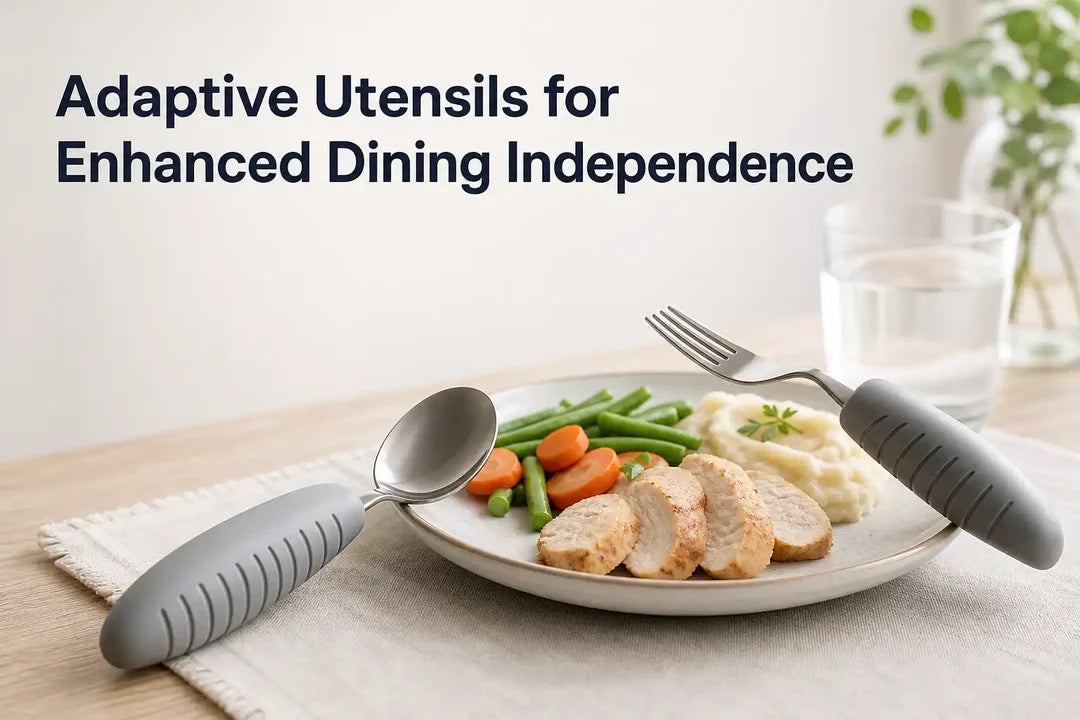
Overview
For individuals with limited hand control, adaptive utensils can transform mealtime from a challenge into an enjoyable experience. These specially designed tools enhance independence and comfort, making it easier to eat without assistance. By understanding key features and selecting the right utensils, users can significantly improve their dining experience and overall quality of life.
Table of Contents
- What Are Adaptive Utensils?
- Conditions That May Require Adaptive Utensils
- Key Features to Look For in Adaptive Utensils
- Comparison of Adaptive Utensil Features
- Product Spotlight: Medline Great Grip Utensils
- How to Use Weighted Utensils Effectively
- Additional Tools for Enhanced Dining
- Care and Maintenance of Adaptive Utensils
- Cleaning and Sanitizing Recommendations
- Storage Tips to Prolong Lifespan
- Signs That Utensils Need Replacement
- Real-Life Applications and User Experiences
- Common Scenarios Where Adaptive Utensils Are Beneficial
- User Testimonials on Improved Dining Experiences
- Impact on Independence and Quality of Life
Key Takeaways
- Adaptive utensils are designed for individuals with limited hand control, enhancing independence during meals.
- Key conditions benefiting from adaptive utensils include arthritis, Parkinson's disease, and post-stroke recovery.
- Look for weighted handles, bendable heads, and ergonomic designs when selecting adaptive utensils.
- The Medline Great Grip Utensils feature a 6 oz. weight and adjustable heads for better control and comfort.
- For optimal use, clean and sanitize utensils regularly and store them properly to prolong their lifespan.
- Adaptive dining aids, such as weighted cups and adaptive plates, can further enhance the dining experience.
- User testimonials highlight a significant improvement in self-esteem and quality of life from using adaptive utensils.
Comparison at a Glance
| Option | Best for | Strengths | Trade-offs |
|---|---|---|---|
| Medline Great Grip Weighted and Bendable Utensils | Individuals with limited hand control | Weighted for stability, bendable for easier maneuverability, ergonomic design | May require adjustment period for new users |
| Medline Postpartum Perineal Irrigation Squirt Bottle | Postpartum care | Gentle cleansing, easy to use | Specific to postpartum needs, not a dining utensil |
| Medline ComfortEase Unisex Reversible Scrub Pants | Healthcare professionals | Comfortable, reversible for versatility | Not related to adaptive dining needs |
| General Adaptive Utensils | Various users with limited mobility | Wide variety of options available, customizable features | Quality and effectiveness can vary significantly |
| Adaptive Plates | Individuals needing assistance with food management | Raised edges to prevent food spillage | May not fit all dining styles |
| Weighted Cups | Users with grip strength issues | Designed for easier gripping, reduces spills | Specific to certain needs, may not suit everyone |
Adaptive utensils are specially designed tools that assist individuals with limited hand control in achieving a more independent and enjoyable dining experience. These utensils are particularly beneficial for those with conditions such as arthritis, Parkinson's disease, or post-stroke recovery, where traditional dining tools may pose challenges. Understanding the importance of adaptive utensils and their key features can help you make informed choices that enhance your daily life.
What Are Adaptive Utensils?
Adaptive utensils are tools designed to accommodate the specific needs of individuals who may struggle with standard dining implements. Their primary aim is to provide better control, comfort, and ease of use, enabling users to eat independently. These utensils often feature unique designs that help users manage their dining experiences more effectively.
The target audience for adaptive utensils includes anyone with limited hand mobility, including seniors, individuals with disabilities, or those recovering from surgery. The benefits of using these utensils extend beyond functionality; they can significantly improve the quality of life by fostering independence during meals, enhancing social interactions, and reducing frustration associated with dining challenges.
Conditions That May Require Adaptive Utensils
- Arthritis or joint pain
- Parkinson's disease
- Stroke recovery
- Neuromuscular disorders
- Post-surgery rehabilitation
Key Features to Look For in Adaptive Utensils
When selecting adaptive utensils, it’s essential to consider specific features that enhance their effectiveness. Here are some key attributes to look for:
- Weighted Handles: Utensils with added weight provide better control and stability, making it easier for users to guide the utensil to their mouth.
- Bendable Heads: Utensils with flexible heads allow users to adjust the angle, making it simpler to maneuver food onto the utensil.
- Ergonomic Designs: Comfort is crucial; look for utensils with ergonomic grips that reduce strain on the hands and facilitate easier handling.
Comparison of Adaptive Utensil Features
| Feature | Medline Great Grip Weighted Utensils | General Adaptive Utensils |
|---|---|---|
| Weighted Handles | Yes, 6 oz. for better control | Varies |
| Bendable Heads | Yes, adjustable for ease of use | Some models offer this |
| Ergonomic Design | Yes, built-up handles for comfort | Varies widely |
By focusing on these features, you can select adaptive utensils that not only meet your specific needs but also enhance your overall dining experience. Taking the time to choose the right utensils can significantly impact your independence and enjoyment during meals, making them a vital addition to your dining aids.
Product Spotlight: Medline Great Grip Utensils
The Medline Great Grip Weighted and Bendable Utensils are designed specifically for individuals who face challenges with hand control. These utensils feature a built-up handle that includes an added weight of 6 oz., providing users with enhanced stability and control while dining. This added weight helps the utensil reach the mouth more easily, promoting independence during meals.

One of the standout features of these utensils is their bendable heads, allowing users to adjust them to their preferred angle for easier maneuverability. This adaptability is particularly beneficial for those with limited wrist mobility, as it enables them to eat with less strain. Whether it's a weighted spoon or fork, the design is tailored to provide a comfortable dining experience.
How to Use Weighted Utensils Effectively
Here’s a step-by-step guide on how to maximize the benefits of the Medline Great Grip Utensils:
- Choose the Right Utensil: Depending on the meal, select either the weighted spoon or fork.
- Adjust the Angle: If needed, bend the utensil head to a comfortable angle that suits your dining style.
- Grip the Handle: Use the built-up handle to grip firmly. The added weight will help you maintain control as you bring food to your mouth.
- Practice: Spend some time getting used to the feel of the utensils, especially if you are new to using adaptive tools.
By following these steps, users can enjoy a more independent and enjoyable dining experience, making mealtime less of a challenge and more of a pleasure.
Additional Tools for Enhanced Dining
While the Medline Great Grip Utensils are a fantastic option for those needing adaptive dining aids, there are additional tools available that can further enhance the dining experience. These may include adaptive plates, cups, and other utensils designed specifically for users with limited hand strength or coordination.
When considering additional dining aids, it's essential to select tools that align with the specific needs of the user. Here are some examples:
- Adaptive Plates: Plates with raised edges can help keep food from sliding off, making it easier to scoop food onto utensils.
- Weighted Cups: These cups often have handles designed for easier gripping, helping users drink without spilling.
- Stabilizing Mats: Non-slip mats can be placed under plates to prevent movement during meals.
To select the right additional dining aids, consider the following decision rule:
- Assess the user’s specific challenges (e.g., grip strength, coordination).
- Determine which features will best support those challenges (e.g., weighted, non-slip, ergonomic).
- Test different products to find the best fit for individual needs and preferences.
By thoughtfully combining various adaptive dining aids, users can create a customized dining experience that promotes independence, comfort, and enjoyment during meals.
Care and Maintenance of Adaptive Utensils
Proper care and maintenance of adaptive utensils are essential for ensuring their longevity and effectiveness. Here are some recommendations to keep your utensils in optimal condition:
Cleaning and Sanitizing Recommendations
- Always wash utensils after each use with warm soapy water. Avoid using abrasive cleaners that could scratch the surface.
- For a deeper clean, you can soak the utensils in a solution of warm water and mild detergent for about 15 minutes before rinsing.
- To sanitize, consider using a solution of 1 tablespoon of bleach in 1 gallon of water. Soak the utensils for a few minutes and then rinse thoroughly.
- Ensure that the utensils are completely dry before storing them to prevent any moisture-related issues.
Storage Tips to Prolong Lifespan
- Store utensils in a clean, dry place away from direct sunlight to prevent degradation of materials.
- Consider using a utensil holder or drawer organizer to prevent scratches and damage when not in use.
- Keep utensils separated to avoid clanging and scratching against one another, which can affect their functionality.
Signs That Utensils Need Replacement
- Check for signs of wear, such as cracks, bends, or discoloration that may affect the utensil's performance.
- If the weighted handles begin to feel loose or the bendable heads are not maintaining their shape, it's time to replace them.
- For utensils that no longer provide the necessary grip or comfort, consider it a sign that they should be replaced.
Real-Life Applications and User Experiences
Adaptive utensils are designed to enhance the dining experience for individuals with limited hand control. Their practical applications can significantly impact users' daily lives.
Common Scenarios Where Adaptive Utensils Are Beneficial
Individuals recovering from surgery, those with conditions such as arthritis, or anyone with reduced motor skills can find adaptive utensils invaluable. For instance, the Medline Great Grip Weighted and Bendable Utensils can facilitate independent eating by providing the necessary weight and bendability, allowing users to maneuver food more easily.
User Testimonials on Improved Dining Experiences
Many users report that adaptive utensils have transformed their mealtime experience. One user noted, "The weighted fork has made a huge difference. I can finally eat without spilling food everywhere!" Such feedback highlights the significant role these utensils play in promoting independence and confidence during meals.
Impact on Independence and Quality of Life
By using adaptive utensils, individuals often experience a boost in self-esteem and independence. Being able to eat without assistance not only enhances their dining experience but also contributes positively to their overall quality of life. The simple act of enjoying a meal becomes a source of pride rather than a challenge.
However, it's important to note that user experiences may vary. While one type of utensil may work perfectly for one person, another may require different features. Therefore, personal trials and adjustments are key to finding the right adaptive tools.


Frequently Asked Questions
1. What are adaptive utensils?
2. Who can benefit from using adaptive utensils?
3. What key features should I look for in adaptive utensils?
4. How should I care for adaptive utensils to ensure their longevity?
5. Can you give examples of additional tools that enhance the dining experience?
Glossary
| Term | Meaning |
|---|---|
| Adaptive Utensils | Tools designed for individuals with limited hand control to enhance dining independence. |
| Weighted Handles | Utensils with added weight for better control and stability during use. |
| Bendable Heads | Utensil heads that can be adjusted for easier maneuverability of food. |
| Ergonomic Design | Utensils with grips that reduce strain on the hands for comfortable handling. |
| Conditions | Health issues like arthritis or stroke that may necessitate adaptive utensils. |
| Post-Surgery Rehabilitation | Recovery phase where adaptive tools can aid in regaining independence during meals. |
| Cleaning Recommendations | Guidelines for maintaining utensils, including washing and sanitizing practices. |
| Storage Tips | Advice on how to store utensils properly to prolong their lifespan. |
| User Testimonials | Feedback from individuals highlighting the positive impact of adaptive utensils. |
| Quality of Life | Overall well-being improved through enhanced independence in dining. |